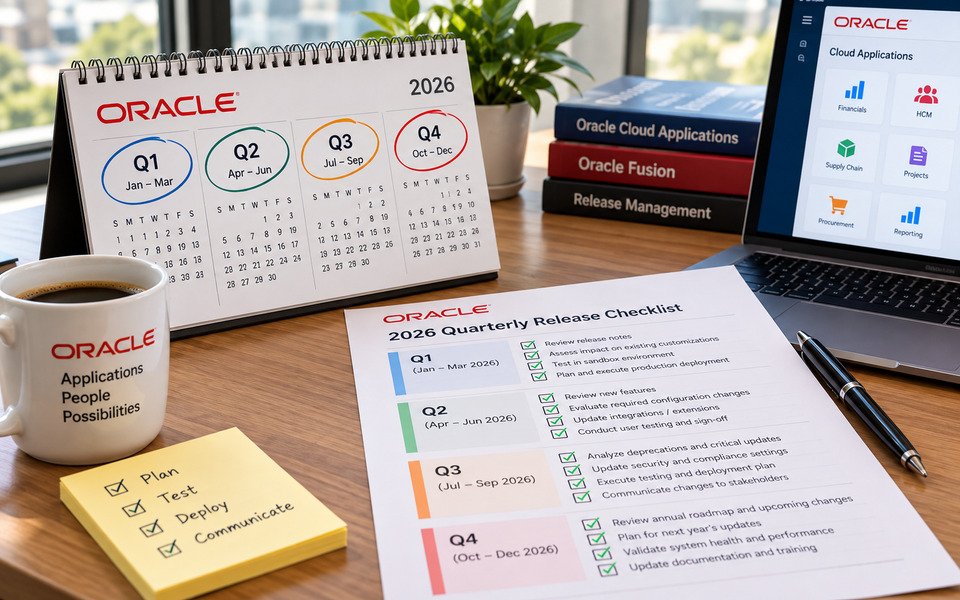
Oracle Cloud applications update automatically, every quarter, whether an organization is ready or not. For teams without a structured readiness process, this becomes a recurring source of anxiety: will this release break an integration, change a report, or silently alter a business process nobody remembers configuring?
The organizations that handle this well don't treat the update as a one-off event. They treat it as a recurring, well-rehearsed process with the same steps every time: read the release notes and map what actually affects their configuration, run regression tests against real business scenarios rather than generic test scripts, validate every integration and inbound or outbound report, and get a documented sign-off before the update reaches production.
What makes this hard in practice isn't the checklist. It's that most internal teams don't have the bandwidth to run it properly four times a year on top of daily support work. So it gets compressed into a rushed week right before the update lands, and things get missed.
The teams that get this right usually have a dedicated function, internal or partnered, whose only job during that window is release readiness. It's a narrow scope, but it removes the single biggest source of unplanned downtime in an otherwise stable Oracle Cloud environment.
Done well, a quarterly update becomes exactly what it should be: routine maintenance. Done poorly, it's a fire drill four times a year, indefinitely.